

Deer feeders, gravity feeders, automatic timer feeders, and timed dispensers for corn and protein, built for hunters and landowners who'd rather hunt than babysit a feeder. Every feeder is assembled in Lamar, Missouri, by American workers.
Feeding deer is one of those things that sounds simple until you've had a feeder quit on you mid-October. The four products above cover three different feeding styles. Here's how to pick.
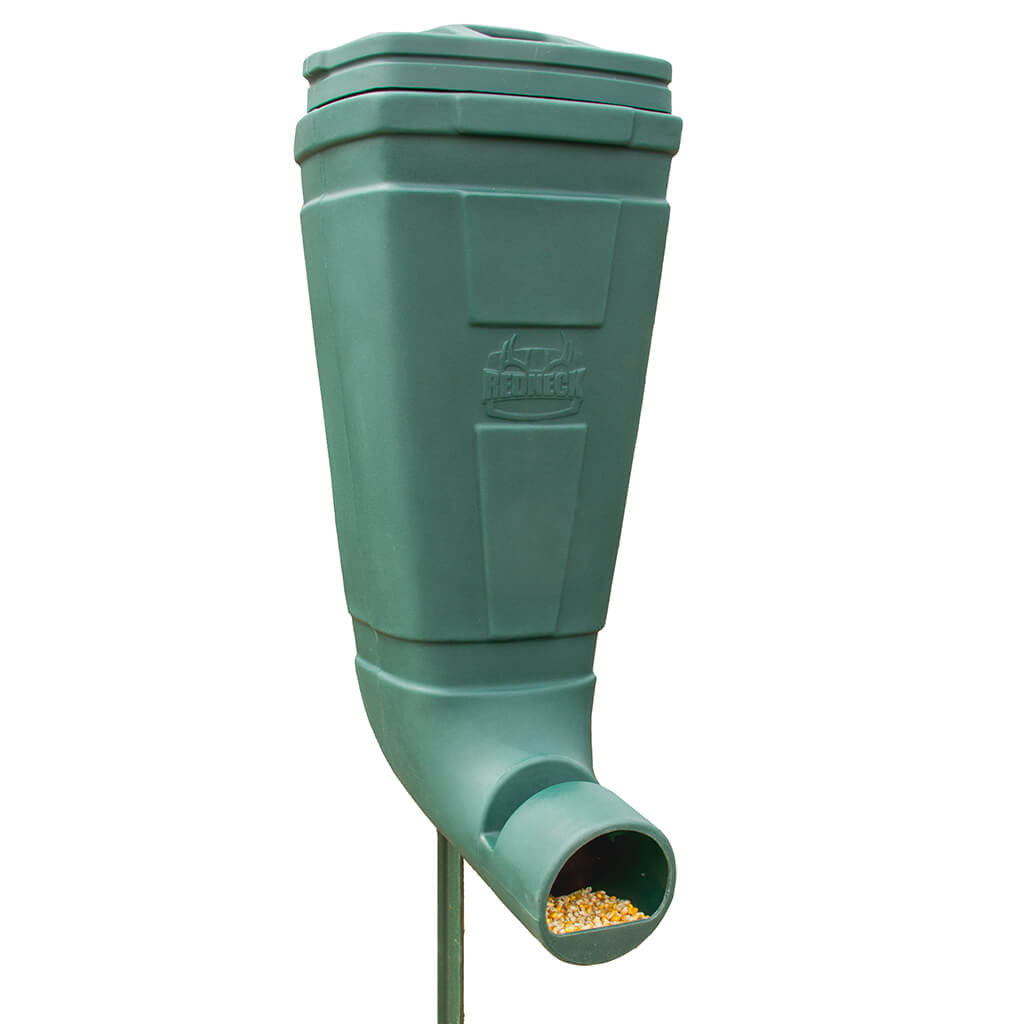
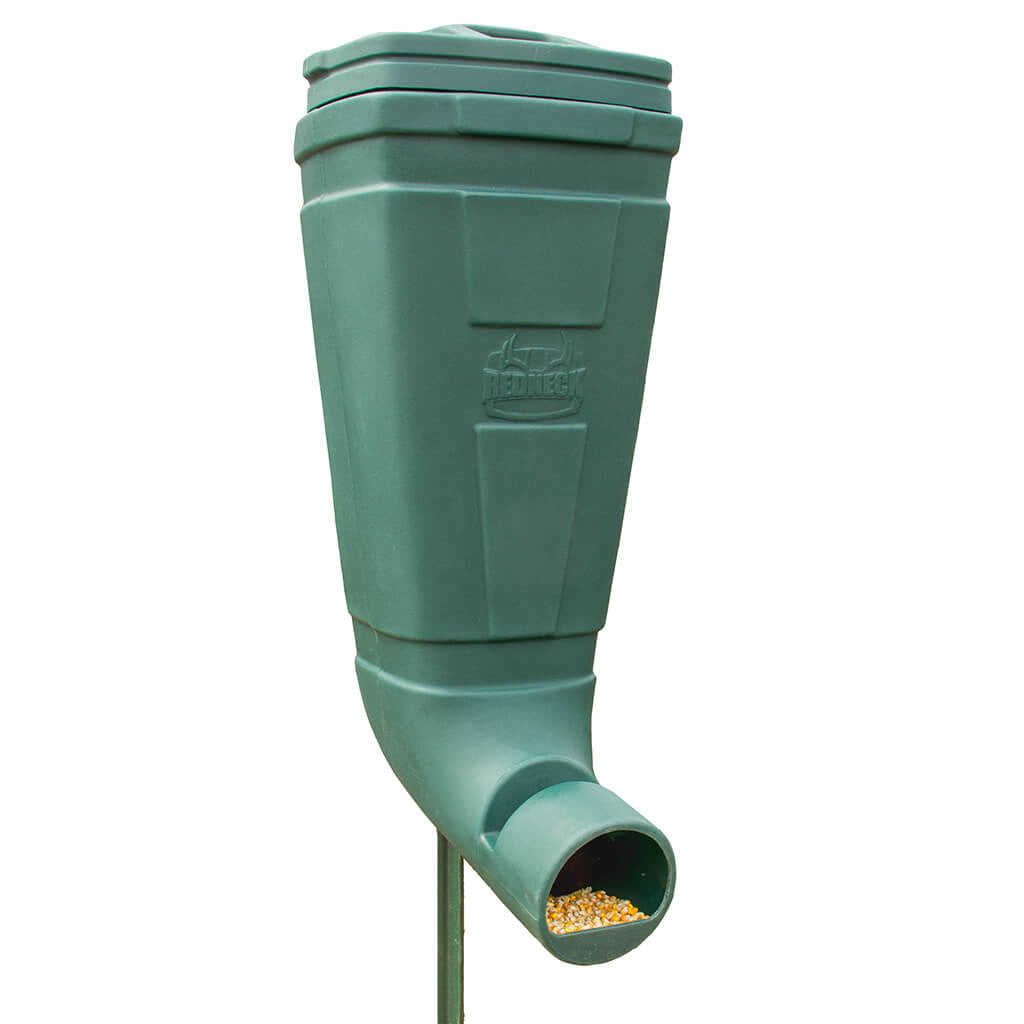
Our gravity deer feeders drop corn when the deer come in to eat. No batteries, no timers, no moving parts. The T-Post Gravity Deer Feeder mounts to any standard T-post in minutes, which makes it easy to move around the property.
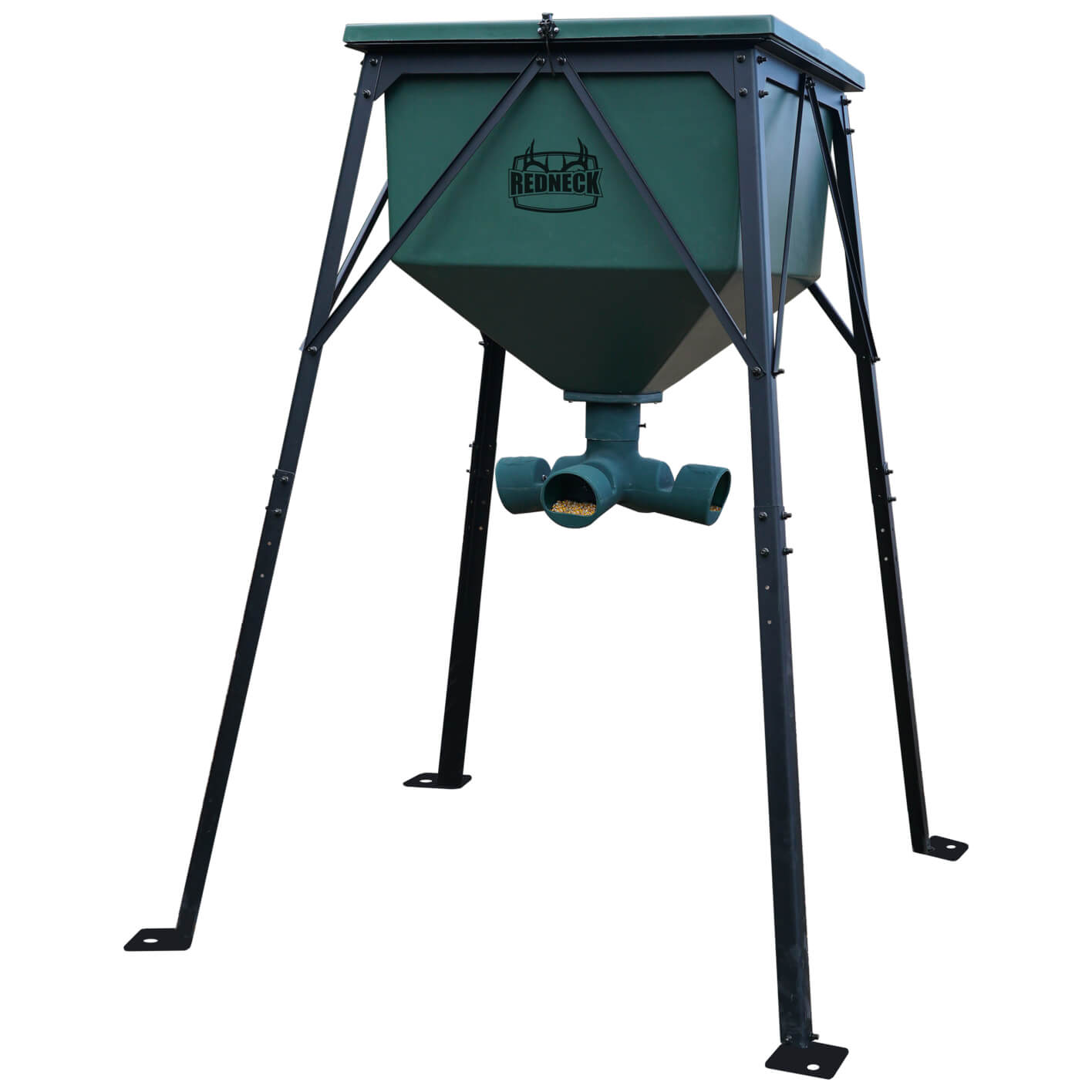
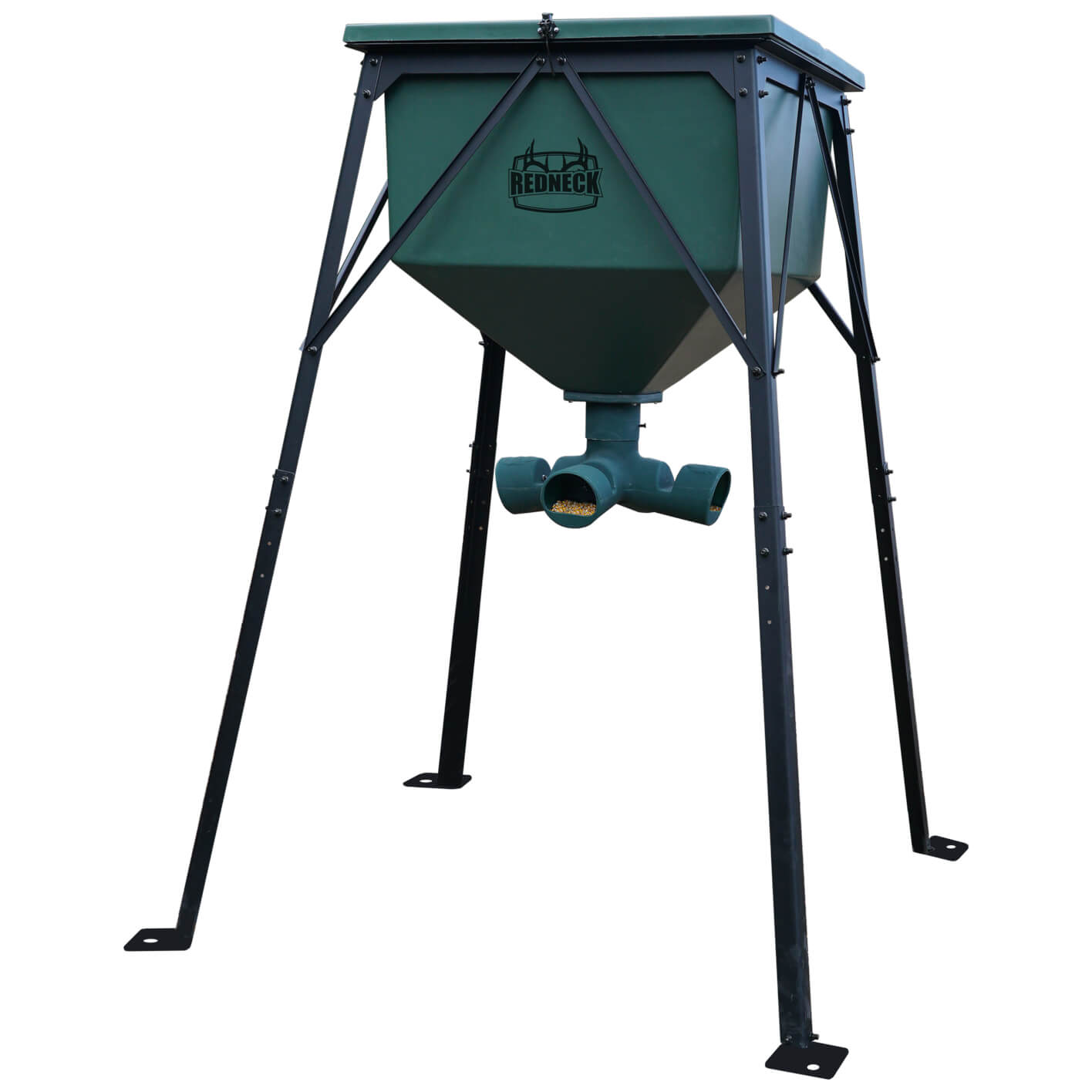
The 750 lb Fiberglass Gravity Deer Feeder holds enough to keep a bigger herd fed through the heart of the season without constant refills, and the fiberglass body won't rust or dent.
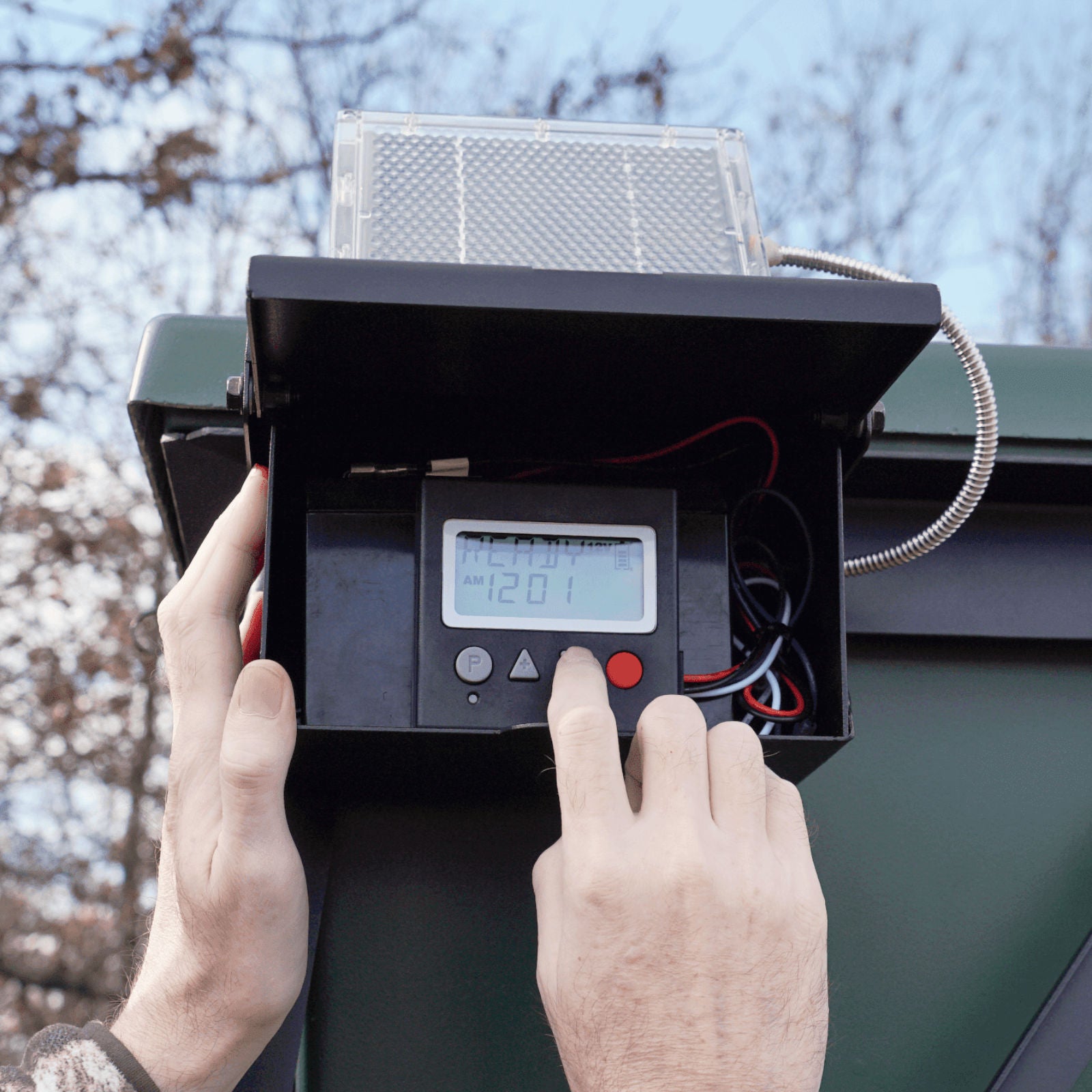
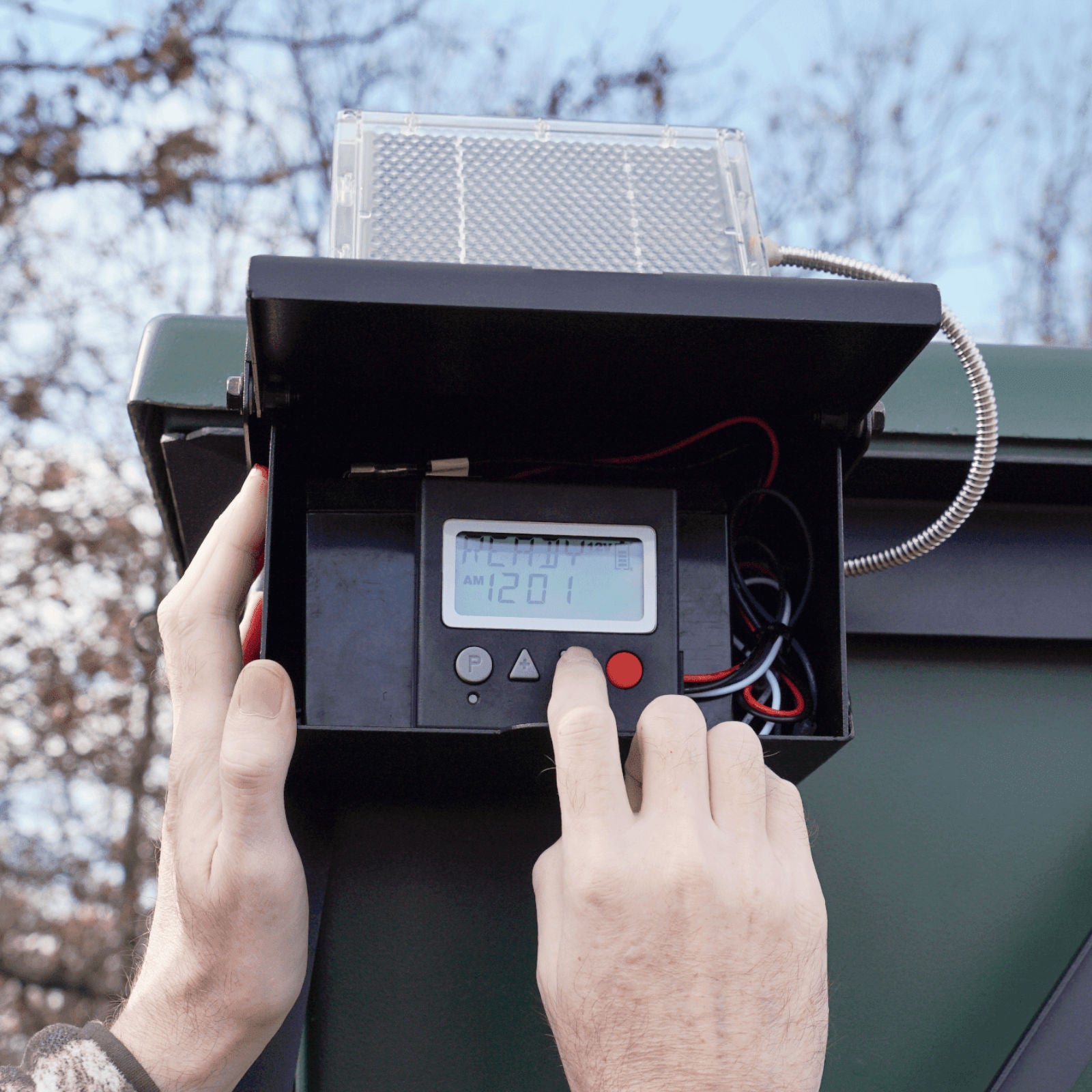
The 600 lb Automatic Deer Feeder runs on a programmable timer, so you can condition deer to show up when you want them to. This is the right feeder if you're trying to pattern a specific shooter buck around a window when you're in the stand.
If you already have a feeder and just want timer control, the Programmable Timed Dispenser mounts to most barrels or hoppers and adds scheduled feeding to an existing setup.
Whatever your property looks like, there's a feeder here that fits. Everyone is assembled in Lamar, Missouri, by American workers, and backed by the same support you'd expect from the #1 deer blind brand in the country.
A gravity feeder drops corn continuously as deer eat. There's no timer, no battery, no motor. It's the simplest way to keep feed available around the clock, and it works with corn, protein pellets, or mixed feeds.
An automatic feeder uses a timer and a spinner to throw feed at set times of day, which lets you condition deer to show up when you want them to.
Gravity wins for simplicity and zero maintenance. Automatic wins when you need control over when deer visit.
Depends on herd size and how much other food is on the property. A healthy whitetail eats 2-4 lbs of corn per day. If you're feeding 8-10 deer regularly, a full 750 lb feeder will last around 3-4 weeks.
The 600 lb Automatic will run shorter because it throws a set amount on a schedule, but you have control over how much and how often. In the off-season with less pressure, both stretch much longer.
Not directly. A gravity feeder is designed to let corn flow when deer eat, with no motor to time.
If you want timer control on a gravity-style setup, add the Programmable Timed Dispenser. It mounts to the bottom of a barrel or hopper and throws corn on a schedule, giving you the best of both designs.
If you'd rather not mix and match, the 600 lb Automatic Deer Feeder is a fully integrated timed unit.
Protein pellets are bigger than corn kernels and need a feeder that won't bridge or clog. Our gravity feeders handle protein feed well because there's no motor or spinner to jam.
The T-Post and 750 lb Fiberglass both work with corn, protein pellets, or mixed feeds. One note: skip salt-based feeds in any feeder with metal components, since salt will eat the hardware over time.
A few rules that work in most setups. Put the feeder where deer already travel, not where you wish they would. Travel corridors between bedding cover and food sources are usually the best starting point.
Keep it 50-75 yards from your blind for most rifle hunters; closer for bow hunters, more like 30-40 yards. Set it on level ground so the corn dispenses evenly, and face it so the sun isn't baking it all afternoon or blinding your shooting lanes at prime time. We typically recommend giving deer 2-3 weeks to get used to a new feeder before you start hunting it, but some deer will be at the feeder the next day.